
Introduction
The healthcare industry is rapidly moving toward digital transformation. Hospitals and clinics are adopting technology to improve efficiency, reduce paperwork, and provide better patient care. One of the most important technologies supporting this transformation is Electronic Medical Record (EMR) software.
An EMR system allows hospitals to digitally store and manage patient data, including medical history, prescriptions, lab reports, diagnoses, and treatment plans. Instead of maintaining large paper files, healthcare providers can access patient records instantly through a secure digital platform.
However, many small hospitals and clinics face challenges when implementing EMR systems. Traditional hospital management software is often expensive, complex, and requires significant IT infrastructure. This makes it difficult for smaller healthcare facilities with limited budgets to adopt digital healthcare solutions.
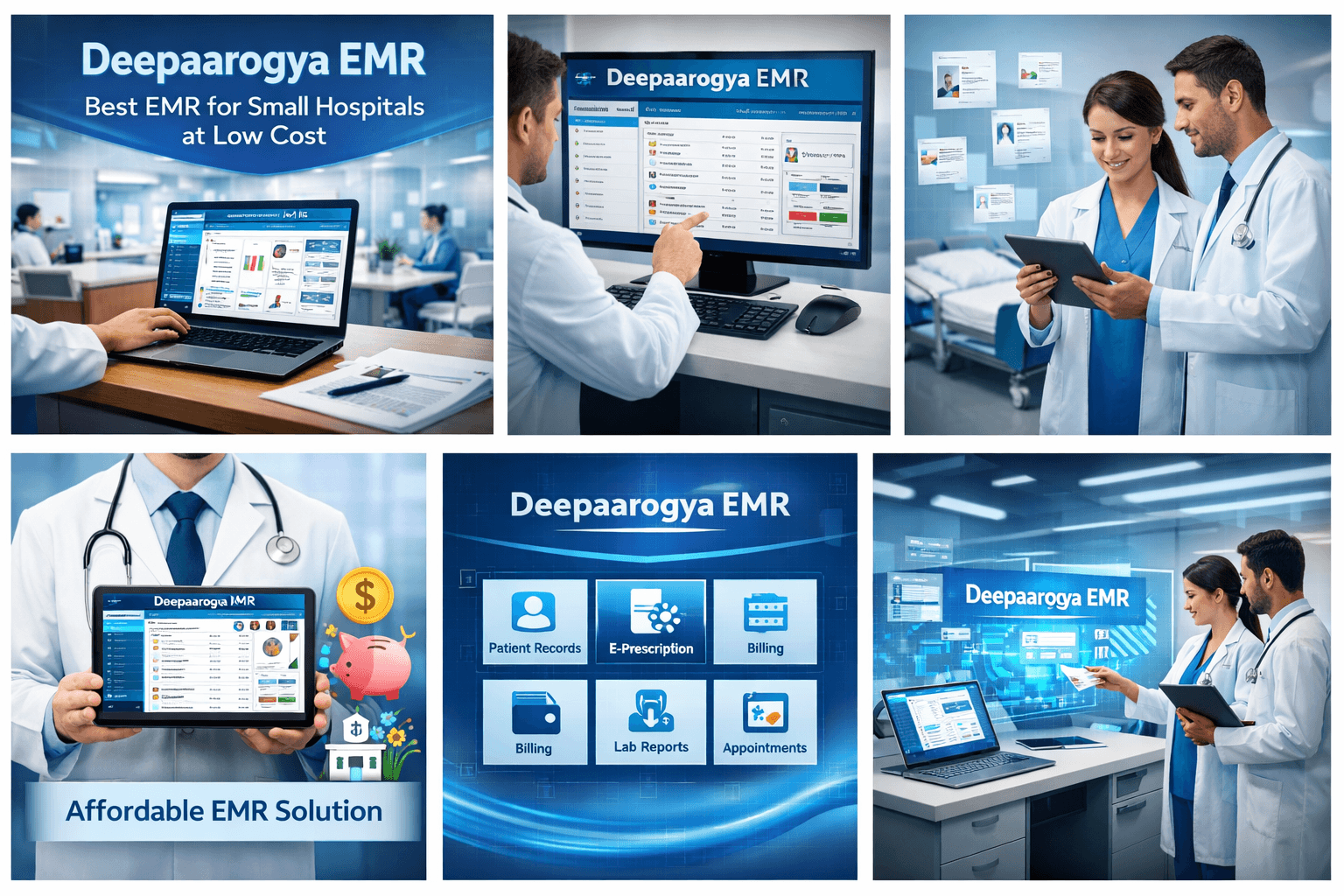
Fortunately, modern cloud-based EMR platforms are making digital healthcare more accessible. Solutions like DeepArogya AI provide affordable, feature-rich EMR systems designed specifically for small hospitals and clinics. These platforms help healthcare providers manage patient data efficiently while keeping operational costs.
⚡Book Demo / Pricing Try for Free
Deepaarogya AI – Best and Affordable EMR Platform
📞 +91 8979523908
What is an EMR System
An Electronic Medical Record (EMR) system is a digital software platform used to store, manage, and retrieve patient healthcare information electronically. Instead of maintaining paper charts, hospitals use EMRs to securely keep records such as patient history, diagnoses, medications, lab reports, doctor notes, prescriptions, and treatment plans.
EMRs also help with clinical workflows — from checking a patient in to generating bills.
Why Small Hospitals Need an Affordable EMR System
Small hospitals handle a large number of patient records every day. Managing this information manually can be time-consuming and prone to errors. Paper-based documentation also makes it difficult to retrieve records quickly during emergencies.
An affordable EMR system helps hospitals digitize their operations without requiring heavy investments.
An affordable EMR system helps healthcare facilities streamline operations and improve patient care.
Challenges Small Hospitals Face Without EMR
Before diving into the best EMR solutions, let’s understand what small hospitals struggle with without digital systems:
🔵Manual Record Problems
Lost or misplaced charts
Time wasted searching for files
Difficult to update information simultaneously
🔵Billing Issues
Manual calculation errors
Delays in insurance claims
Difficulty tracking payments
🔵Communication Gaps
No shared access between departments
Miscommunication between doctors and staff
Key Benefits of Low-Cost EMR Systems
🔵Digital Patient Records
One of the primary benefits of EMR software is digital patient record management. The system stores complete patient history, including previous consultations, medications, diagnoses, and treatment plans.
Doctors can access patient data instantly, which helps them understand medical history and provide better treatment.
🔵Improved Patient Care
With quick access to patient records, doctors can make faster and more informed clinical decisions. EMR systems also reduce the risk of medical errors caused by incomplete or misplaced records.
Better information leads to better diagnosis and improved patient outcomes.
🔵Reduced Paperwork
With quick access to patient records, doctors can make faster and more informed clinical decisions. EMR systems also reduce the risk of medical errors caused by incomplete or misplaced records.
Better information leads to better diagnosis and improved patient outcomes.
🔵Better Appointment Management
EMR systems allow hospitals to manage appointments digitally. Patients can be scheduled efficiently, and waiting times can be reduced.
Automated reminders also help reduce missed appointments.
🔵Cost Efficiency
Modern EMR platforms are cloud-based, which means hospitals do not need to invest in expensive hardware or servers. This makes digital healthcare solutions more affordable for small hospitals.
Essential Features of a Low-Cost EMR for Small Hospitals
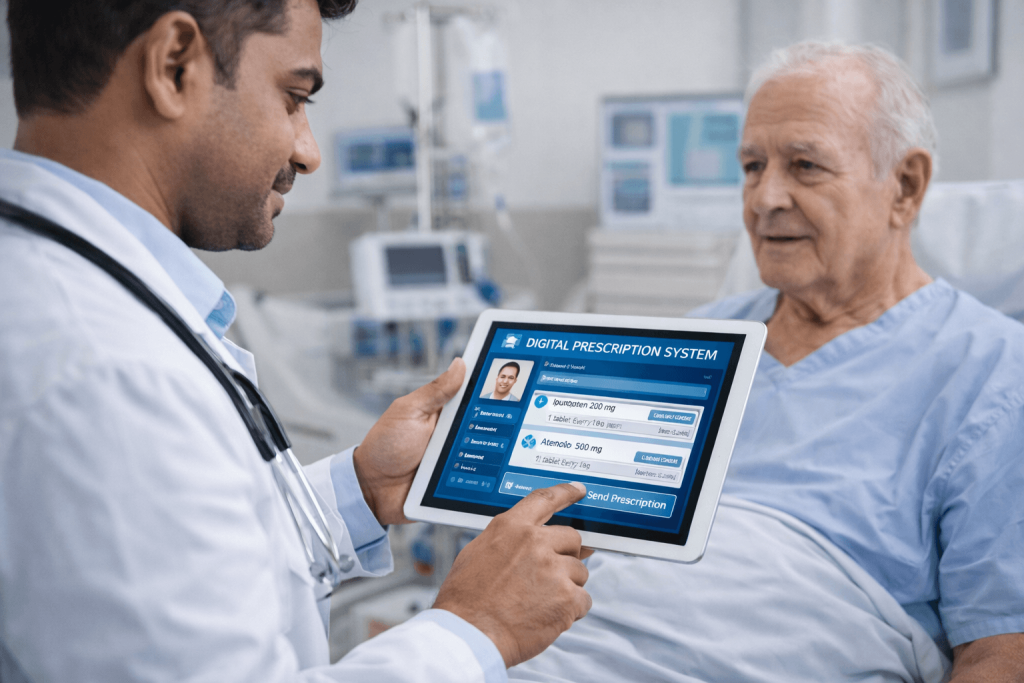
When choosing an EMR system, hospitals should ensure that the software includes essential features required for daily clinical operations.
A good EMR platform should include the following features:
🔵Electronic Medical Records
he system should store detailed patient medical records securely. This includes patient demographics, visit history, prescriptions, and diagnostic reports.
🔵Digital Prescription System
Doctors should be able to generate digital prescriptions quickly. Digital prescriptions reduce handwriting errors and improve clarity for patients and pharmacies.
🔵Appointment Scheduling
An integrated appointment system helps hospitals manage patient visits efficiently. Staff can easily schedule, modify, or cancel appointments.
🔵Billing and Invoicing
A reliable EMR system should include billing tools to generate invoices and track payments. This simplifies financial management for hospitals.
🔵Laboratory Integration
Integration with diagnostic laboratories helps doctors access test results quickly. This improves diagnosis and treatment planning.
🔵Data Security and Backup
Since patient data is sensitive, the EMR system must include strong security features such as encryption and automatic backups.
🔵Reports and Analytics
Hospitals can generate reports on patient visits, revenue, and treatment outcomes. These insights help management make better decisions.
👉 Contact Now 📞 +91 8979523908
📧https://www.deepaarogya.com/
DeepAarogya AI – A Smart and Affordable EMR Solution
DeepArogya AI is an innovative healthcare technology platform designed to support hospitals and clinics in their digital transformation journey.
The platform offers an affordable and user-friendly EMR system that helps healthcare providers manage patient information efficiently. It combines AI-powered healthcare tools with modern clinic management features, making it an ideal solution for small hospitals.
DeepArogya AI focuses on simplifying hospital operations while improving the quality of patient care.
Key Advantages of DeepAarogya AI EMR
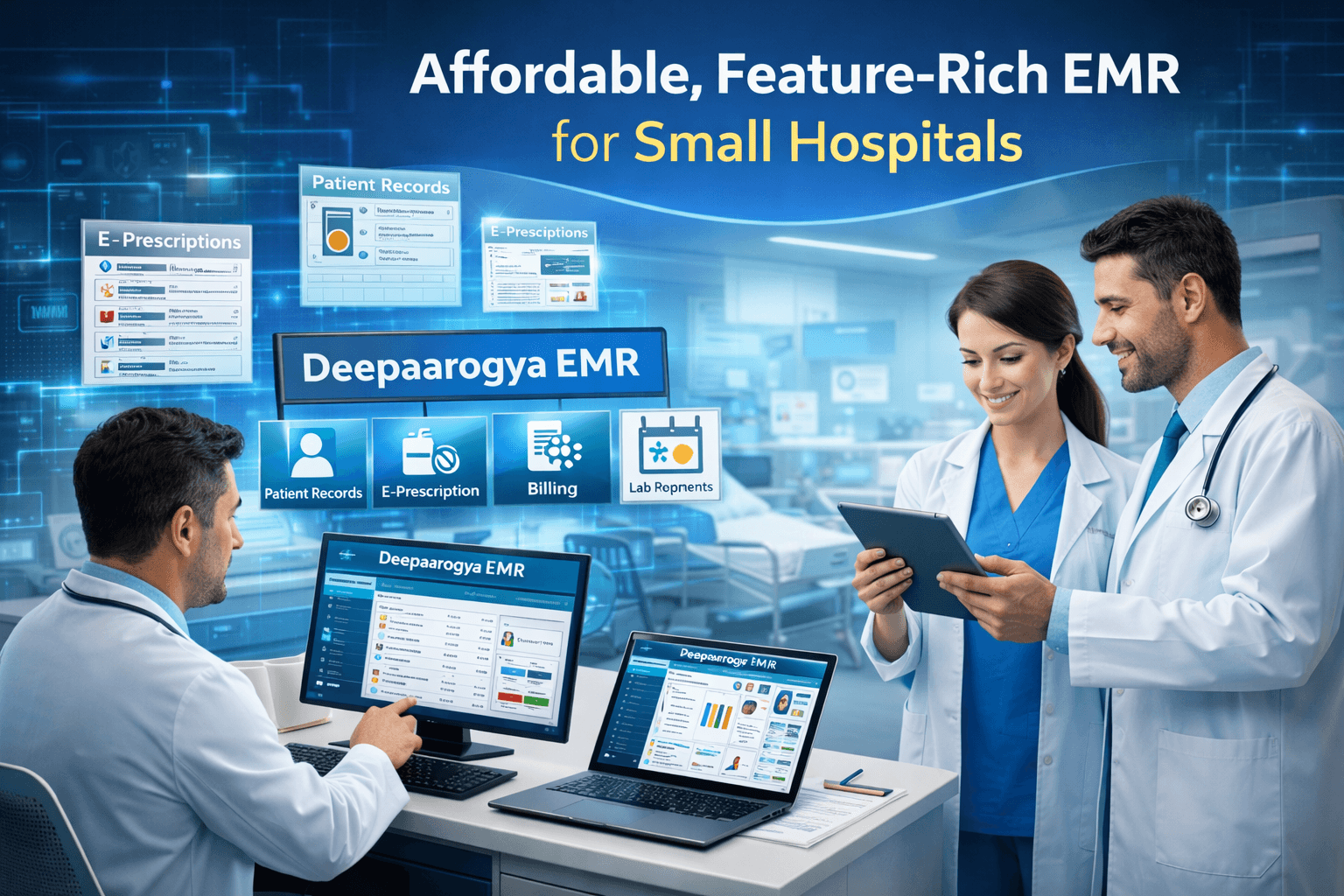
🔵Smart Patient Record Management
DeepArogya AI allows hospitals to store and manage complete patient records digitally. Doctors can access previous consultations, prescriptions, and reports with just a few clicks.
This eliminates the need for physical record storage.
🔵AI-Powered Clinical Assistance
The platform uses artificial intelligence to assist doctors with clinical documentation and decision-making. AI tools can help streamline record-keeping and improve workflow efficiency.
🔵Digital Prescription System
Doctors can generate prescriptions digitally within seconds. These prescriptions can be shared with patients electronically, reducing confusion caused by handwritten prescriptions.
🔵Appointment and Queue Management
DeepArogya AI includes tools for scheduling patient appointments and managing queues. Hospitals can organize patient flow more effectively and reduce waiting times.
🔵Integrated Billing and Payments
The system provides billing features that allow hospitals to generate invoices, track payments, and manage financial records in one place.
🔵Cloud-Based Access
DeepArogya AI is a cloud-based platform, which means doctors and hospital staff can access it from anywhere using computers, tablets, or smartphones.
This flexibility is particularly useful for modern healthcare practices.
🔵Secure Data Storage
Patient data is protected using advanced security protocols and encrypted cloud storage. Regular backups ensure that important medical records are never lost.
Why DeepAarogya AI is Ideal for Small Hospitals⚡
DeepArogya AI is designed specifically to address the challenges faced by small and medium healthcare facilities.
✔Affordable Pricing
The platform offers cost-effective pricing plans, making it accessible to hospitals with limited budgets.
✔Easy to Use
The system has a simple and intuitive interface. Doctors and hospital staff can start using it without extensive training.
✔Quick Implementation
Unlike traditional hospital management systems, DeepArogya AI can be implemented quickly without complex installation processes.
✔Scalable Solution
As hospitals grow, the platform can be expanded with additional features and modules.
✔AI-Driven Healthcare Technology
DeepArogya AI introduces advanced technology into everyday clinical operations, helping hospitals improve efficiency and patient care.
The Future of EMR Systems in India with DeepAarogya AI
India’s healthcare sector is undergoing rapid digital transformation. Government initiatives like the Ayushman Bharat Digital Mission (ABDM) are encouraging hospitals and clinics to adopt digital health systems.
In the coming years, EMR platforms are expected to include advanced technologies such as:
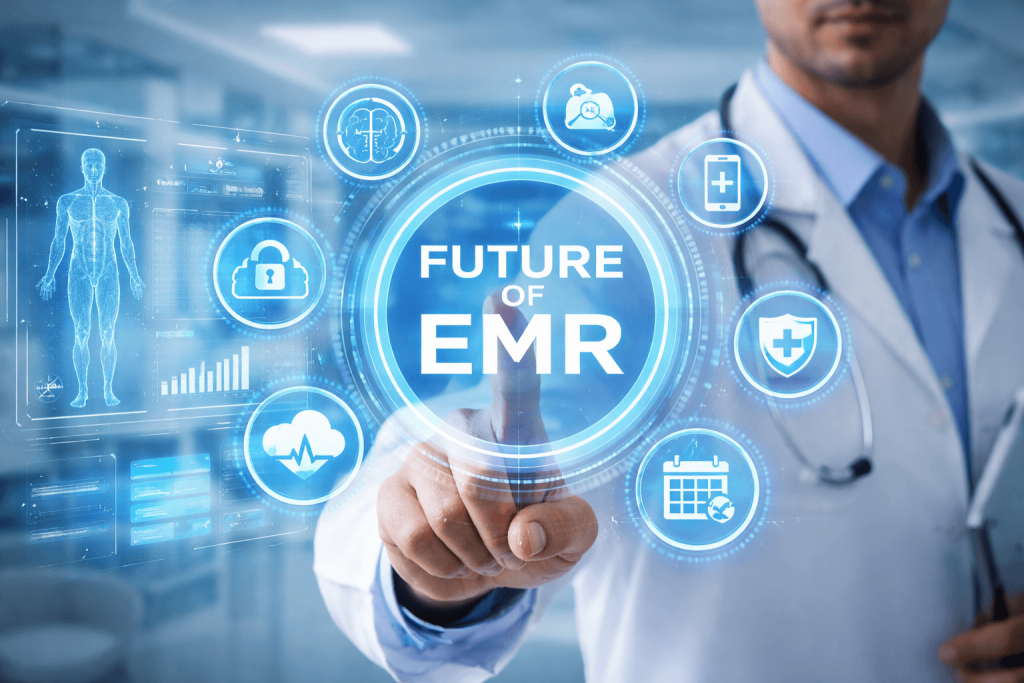
✔Artificial Intelligence in Healthcare
AI will assist doctors in diagnosis, treatment planning, and predictive healthcare analytics.
✔Telemedicine Integration
EMR systems will increasingly include teleconsultation features, allowing doctors to provide remote healthcare services
✔Mobile-First Healthcare Solutions
Many healthcare providers prefer mobile-based platforms, which allow them to access patient data anytime and anywhere.
✔National Health Data Integration
Future EMR systems will connect with national digital health infrastructure, allowing secure sharing of patient records across healthcare providers.
Affordable solutions like DeepAarogya AI will play a significant role in enabling small hospitals to participate in this digital healthcare ecosystem.
📌Conclusion
Electronic Medical Record systems have become essential for modern healthcare management. They help hospitals store patient information securely, streamline clinical workflows, and improve the overall quality of patient care.
While traditional hospital software solutions can be expensive, modern cloud-based EMR platforms have made digital healthcare accessible even for small hospitals and clinics.
Solutions like DeepAarogya AI provide a powerful combination of affordability, advanced features, and ease of use. By adopting an affordable EMR system, small hospitals can improve efficiency, reduce administrative workload, and deliver better healthcare services.
As digital healthcare continues to grow in India, adopting the right EMR platform will be crucial for hospitals looking to stay competitive and provide high-quality patient care.
Get Started with DeepAarogya AI
Transform your hospital operations with DeepAarogya AI – a smart, affordable, and feature-rich EMR solution designed for modern healthcare providers.
Book a free demo today to explore how DeepArogya AI can help your hospital digitize patient records, manage appointments, and improve overall efficiency.
Contact
Website: https://www.deepaarogya.com/
+91 8979523908
💡Frequently Asked Questions (FAQs)
1.What is an EMR system?
Electronic Medical Record (EMR) is a digital system used by hospitals and clinics to store patient medical records such as history, prescriptions, diagnoses, and reports.
2.Why do small hospitals need EMR software?
Small hospitals need EMR software to manage patient records efficiently, reduce paperwork, improve patient care, and streamline hospital operations.
3.Is EMR software expensive for small hospitals?
Many modern EMR systems are cloud-based and affordable. Solutions like DeepArogya AI are designed to provide powerful healthcare management features at a low cost.
4.Can EMR software improve patient care?
Yes, EMR systems provide quick access to patient history and medical records, helping doctors make faster and more accurate clinical decisions.
5.Is patient data secure in EMR systems?
Most modern EMR platforms use encrypted cloud storage and strong security protocols to protect sensitive patient data.