
Introduction
Oncology HMIS for treatment planning and tracking is becoming essential in modern healthcare. Cancer care is one of the most complex areas in healthcare, where hospitals and clinics must manage chemotherapy, radiation therapy, surgery, lab tests, imaging, and follow-ups—all while maintaining accurate patient records and ensuring timely treatment delivery.
A modern Oncology Hospital Management Information System (HMIS) helps streamline workflows, automate treatment planning, track patient progress, and improve patient outcomes.
Oncology Treatment Workflow
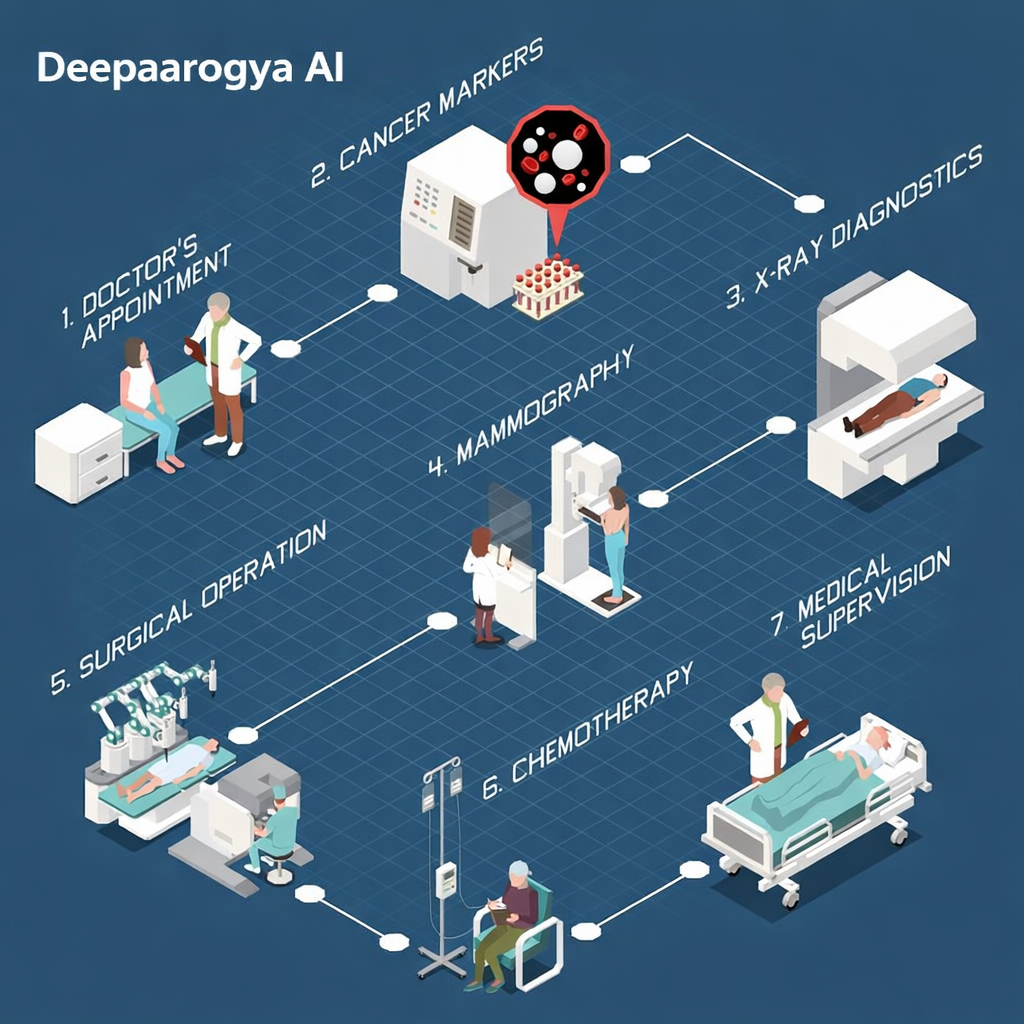
Captions: Illustration of a complete oncology treatment workflow with integrated planning and tracking.
Why Treatment Planning and Tracking is Critical in Oncology
Cancer treatment requires precise coordination across multiple therapies:
- Chemotherapy cycles must follow strict protocols
- Radiation therapy requires accurate dose planning
- Surgeries must align with ongoing treatments
Without proper systems:
- Missed treatment cycles
- Scheduling conflicts
- Increased clinical errors
According to the World Health Organization, improving treatment coordination and early diagnosis significantly increases survival rates.
Key Features of Oncology HMIS
1. Centralized Patient Records
- Medical history
- Lab reports
- Imaging results
- Prescriptions and treatment plans
Improves clinical decision-making and reduces duplication.
2. Treatment Planning & Protocol Management
- Chemotherapy cycle tracking
- Radiation dose scheduling
- Automated alerts and reminders
Ensures timely and accurate treatment delivery.
HMIS Dashboard Example
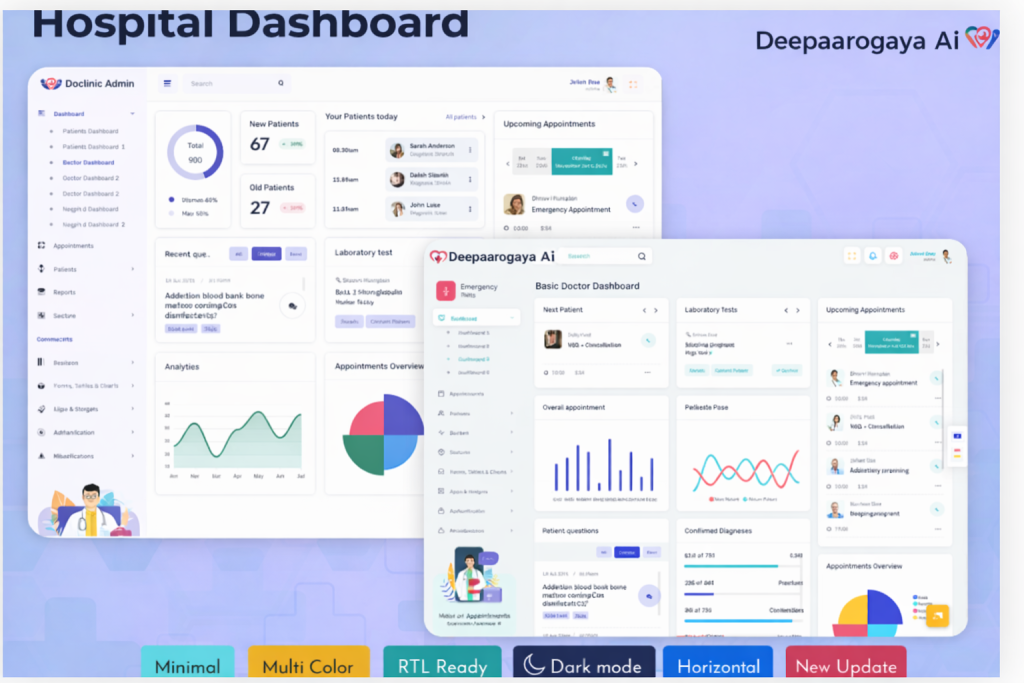
Captions: Example of an HMIS dashboard used for oncology patient management and analytics
3. Appointment Scheduling
- Multi-doctor coordination
- Department-wise scheduling
- Automated notifications
Reduces waiting time and improves operational efficiency.
4. Mobile Access & Teleconsultation
- Remote access to patient records
- Telemedicine support
Enables continuous care even outside the hospital.
5. Analytics & Reporting
- Treatment outcomes
- Patient progress
- Hospital performance
Helps in data-driven decisions.
6. Integration with Labs & Pharmacy
- Real-time lab results
- Medication tracking
Ensures seamless workflow across departments.
Top Oncology HMIS Platforms for Treatment Planning and Tracking
1. Deepaarogaya AI
- Precision Oncology Focus – Specialized in Rare Gynecological Tumors (RGT)
- AI + LLM Powered Clinical Decisions – Fast and accurate treatment recommendations
- Digital Twin Technology – Virtual patient model for better prediction and planning
- Smart Clinical Trial Matching – Identifies suitable trials with cost coverage insights
- Personalized / Targeted Therapy – Data-driven treatment selection
- Multimodal Data Integration – Combines lab, imaging, and genomic data in one platform
- Real-Time Decision Support – Provides instant insights to doctors
- Continuous Learning System – Improves over time using new data
- Automated Medical Documentation – Saves time and reduces errors
- End-to-End Oncology Workflow – Supports from diagnosis to treatment tracking
2. Epic Beacon Oncology
- Enterprise-grade oncology system
- Multi-specialty collaboration
- Advanced analytics
3. Elekta MOSAIQ Oncology
- Radiation-focused HMIS
- Dose tracking and compliance
4. Varian ARIA Oncology
- Integrated chemo + radiation workflows
- Scheduling linked with treatment cycles
5. Allscripts Oncology EMR
- Cloud-based oncology EMR
- Telemedicine support
- Analytics and reporting
Oncology Technology Integration
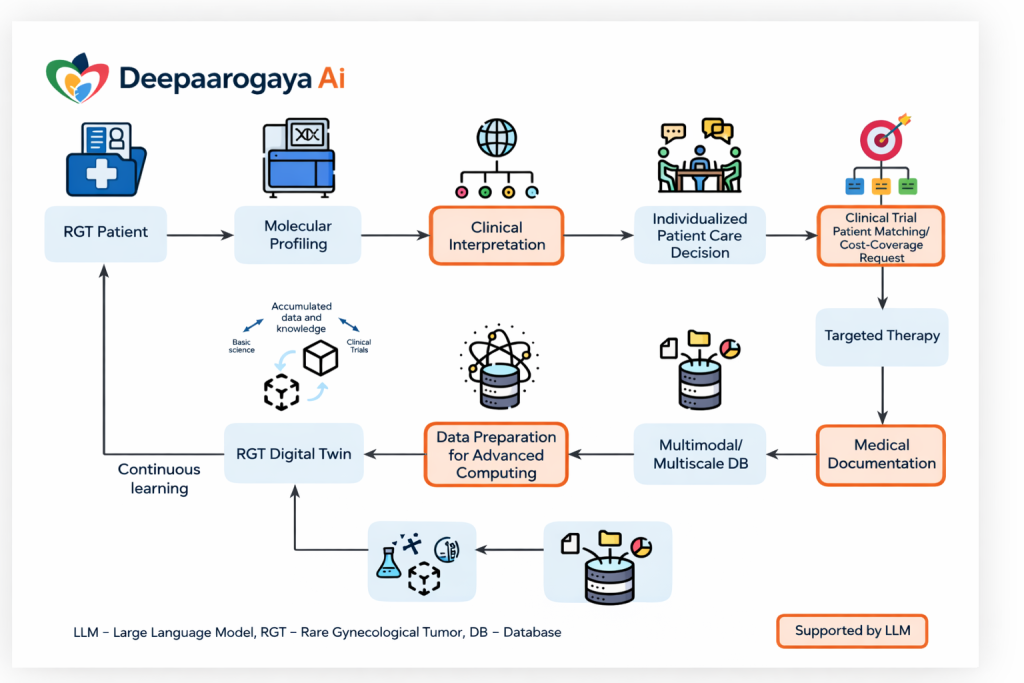
Captions: Modern oncology systems integrating AI, EMR, and analytics for better patient care.
How Deepaarogaya AI Helps in Oncology HMIS
- Solves Data Complexity with AI
Converts complex clinical, genomic, and imaging data into simple, actionable insights - Unified Data Platform (No Data Silos)
Combines EMR, lab reports, imaging, and genomics in one place
Traditional systems often store data separately, making decision-making difficult - Real-Time Decision Support
Doctors get instant treatment recommendations instead of manual analysis - Accurate Clinical Trial Matching
Automatically finds best trials for patients (saves time + improves outcomes) - Digital Twin for Better Prediction
Simulates patient condition → helps in predicting treatment response - Automation of Documentation
Reduces duplicate data entry and manual workload - Continuous Learning System
Improves accuracy over time using new patient data
Problems in Other Oncology HMIS & Deepaarogaya Solutions
| Problems in Other Systems | Deepaarogaya AI Solutions |
|---|---|
| Data Silos (separate systems) – EMR, labs, imaging not connected | Unified Multimodal Platform – all data in one system |
| Poor Interoperability – systems don’t communicate properly | Integrated Ecosystem – seamless data flow across modules |
| Duplicate Documentation & Errors | Automated Documentation – reduces manual work & mistakes |
| Incomplete / Missing Data | Structured Data Processing – ensures complete datasets |
| Difficult to Use (Low Usability) | User-Friendly AI Interface – easy for doctors to use |
| Slow Decision Making | AI-Based Instant Insights |
| Lack of Personalization in Treatment | Personalized / Targeted Therapy Recommendations |
| Manual Clinical Trial Search | Automated Trial Matching System |
| Poor Patient Data Tracking | End-to-End Tracking (Diagnosis → Treatment) |
Benefits of Using Oncology HMIS
Improved Patient Outcomes
Accurate tracking ensures timely treatment and better recovery rates.
Better Coordination
All departments work with synchronized data.
Reduced Errors
Automation minimizes manual mistakes.
Time Efficiency
Streamlined workflows save time for doctors and staff.
Enhanced Patient Engagement
Automated reminders improve adherence to treatment plans.
Data Security & Compliance
Cloud-based systems ensure secure and compliant data storage.
Why Deepaarogaya AI App Oncology HMIS Stands Out
Among all solutions, Doctors App provides a complete and scalable platform for oncology care:
- Centralized patient data
- Protocol-based treatment tracking
- Smart scheduling system
- Mobile and teleconsultation support
- Real-time analytics
Future of Oncology HMIS
AI Integration
- Predict treatment outcomes
- Assist in diagnosis
Mobile-First Healthcare
- Remote monitoring
- Real-time updates
Personalized Treatment
- Data-driven therapy plans
Cloud-Based Systems
- Scalable and secure infrastructure
Conclusion
Oncology care requires precision, coordination, and efficiency. A modern Oncology HMIS plays a critical role in treatment planning and tracking, helping healthcare providers deliver better patient outcomes.
By adopting the right HMIS, hospitals and clinics can:
- Reduce errors
- Improve workflow efficiency
- Enhance patient care
Solutions like Doctors App Oncology HMIS provide a comprehensive, future-ready platform for managing complex oncology operations.
FAQs
1. What is Oncology HMIS?
A system designed to manage cancer treatment workflows, patient records, and hospital operations.
2. Why is treatment tracking important in oncology?
It ensures patients receive timely and accurate therapy.
3. Can HMIS improve patient outcomes?
Yes, through automation, coordination, and real-time data.
4. Is Oncology HMIS suitable for small clinics?
Yes, cloud-based systems are scalable for all sizes.
5. What features should I look for in an Oncology HMIS?
- EMR/EHR integration
- Treatment tracking
- Scheduling
- Analytics
- Mobile access