
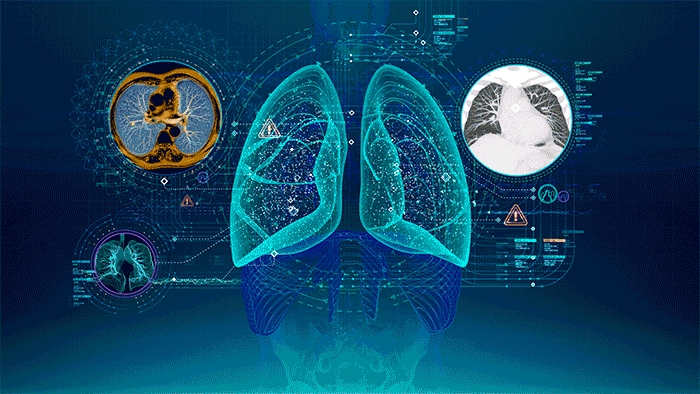
Imagine visiting a doctor who has read millions of medical books, lab reports, X-rays, ECGs, and patient histories—and can analyze them in seconds.
That is what Medical Artificial Intelligence (AI) does.
But many people think AI is complicated, mysterious, or even dangerous.
It is not.
In this article, we will explain how medical AI actually works and how innovative Indian healthcare startups like DeepAarogya AI are transforming care delivery.
What Is a Medical AI Algorithm?
At its core, an algorithm simply follows a set of rules to solve a problem. In healthcare, a medical AI algorithm is a computer program trained to recognize patterns in health data — like heart rate, lab reports, symptoms, or medical history — and use those patterns to help diagnose diseases, predict risks, or guide treatment decisions.
Unlike human rules (e.g., “if fever + cough → possible flu”), AI learns patterns from large amounts of real patient data — much like a doctor learns from years of experience.
How These Algorithms “Learn” — Without Being Told Exactly What to Do
AI uses machine learning — a way of training computers to learn from examples instead of hard-coded rules.
Here’s how it works:
Data Input: Lots of health records like lab results or vital signs are collected.
Training: An algorithm looks at these examples and learns what combinations of features (like blood pressure + age + symptoms) tend to lead to certain outcomes.
Pattern Recognition: Over time, AI learns patterns that might be too subtle or complex for humans to spot.
Prediction: Once trained, the AI can apply what it learned to new patients and deliver insights — often in seconds.
This “learning from data” is what makes AI powerful, especially in critical care where minutes can save lives.
Deep Learning — the Power Behind Most Medical AI
Modern medical AI often uses a type of machine learning called deep learning — inspired by how the human brain works. These systems, called neural networks, can learn from very complex and large datasets.
For example:
A deep learning model might analyze thousands of patient lab reports to understand how combinations of readings indicate early deterioration.
Some advanced systems use architectures like transformers, which can handle complex sequences of data efficiently.
This means AI can detect warning signs earlier and more consistently than traditional computer programs.
Real-World Medical AI: From Prediction to Prevention
Medical AI can do things like:
Early Warning Systems
Some AI tools watch vital signs and lab reports to predict if a patient’s condition might get worse soon. Startups like DeepAarogya AI build systems that alert clinicians early — even in the first few hours of ICU admission, helping reduce risk and saving lives.
Such systems are trained on real ICU data so they learn which combinations of signals often lead to deterioration — much faster than manual review.
Smart Medical Records & Workflows
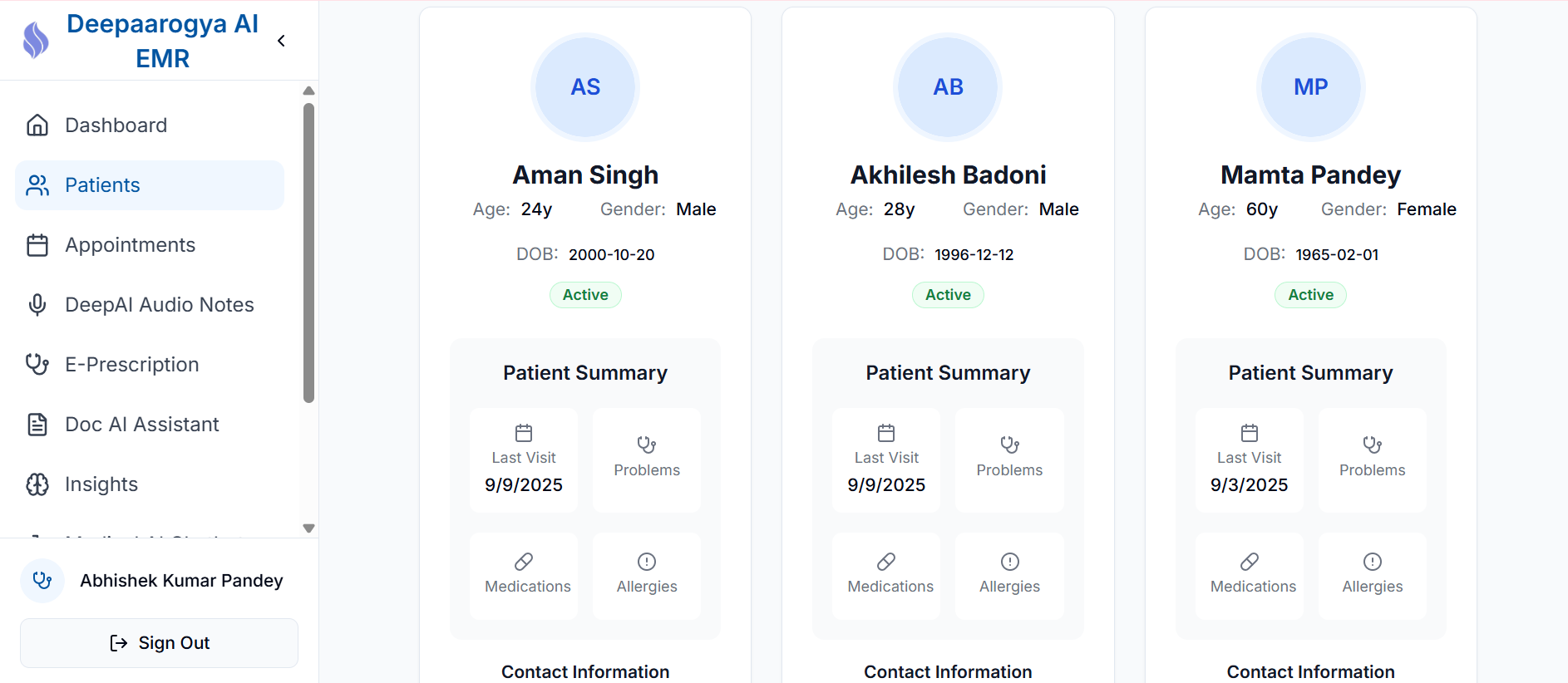
AI can also read and summarise medical histories, organise records, or even generate summaries of a patient’s condition — saving doctors hours of administrative work daily.
What Kind of Data Do These Algorithms Use?
Medical AI models learn from:
Lab values (e.g., blood tests)
Vital signs (heart rate, blood pressure)
Medical histories and notes
Imaging data (like x-rays or scans)
Electronic Medical Records (EMR)
Algorithms find patterns in this data the way a doctor might notice trends across many patients — but AI can do it faster and at much larger scale.
Why Medical AI Is Trusted — and What It Needs to Work Well
For AI to work safely in healthcare, it must meet certain standards:
Accuracy
AI systems are trained and tested on real clinical datasets to ensure they make reliable predictions.
Validation With Clinicians
Doctors must confirm that AI outputs make sense in real-world care.
Ethics and Privacy
Patient data must be secure, and AI decisions should avoid bias.
Book Demo / Pricing Try for Free
Deepaarogya AI – Orthodontic EMR Platform  +91 8979523908
  contact@deepaarogya.com
Simplifying Complex Decisions — for Doctors and Patients
One of the biggest advantages of medical AI is that it helps clinicians make complex decisions without being overwhelmed by raw data. Instead of manually comparing dozens of numbers or records, AI highlights the most important risk signals.
This means:
✅Faster diagnoses
✅Fewer errors
✅More personalised care
✅Better resource use in hospitals